

TikTok Addiction: How Excessive Scrolling Can Affect Your Mental Health
Understanding compulsive TikTok use, emotional dependency, reduced concentration and practical ways to regain control of your time and wellbeing.
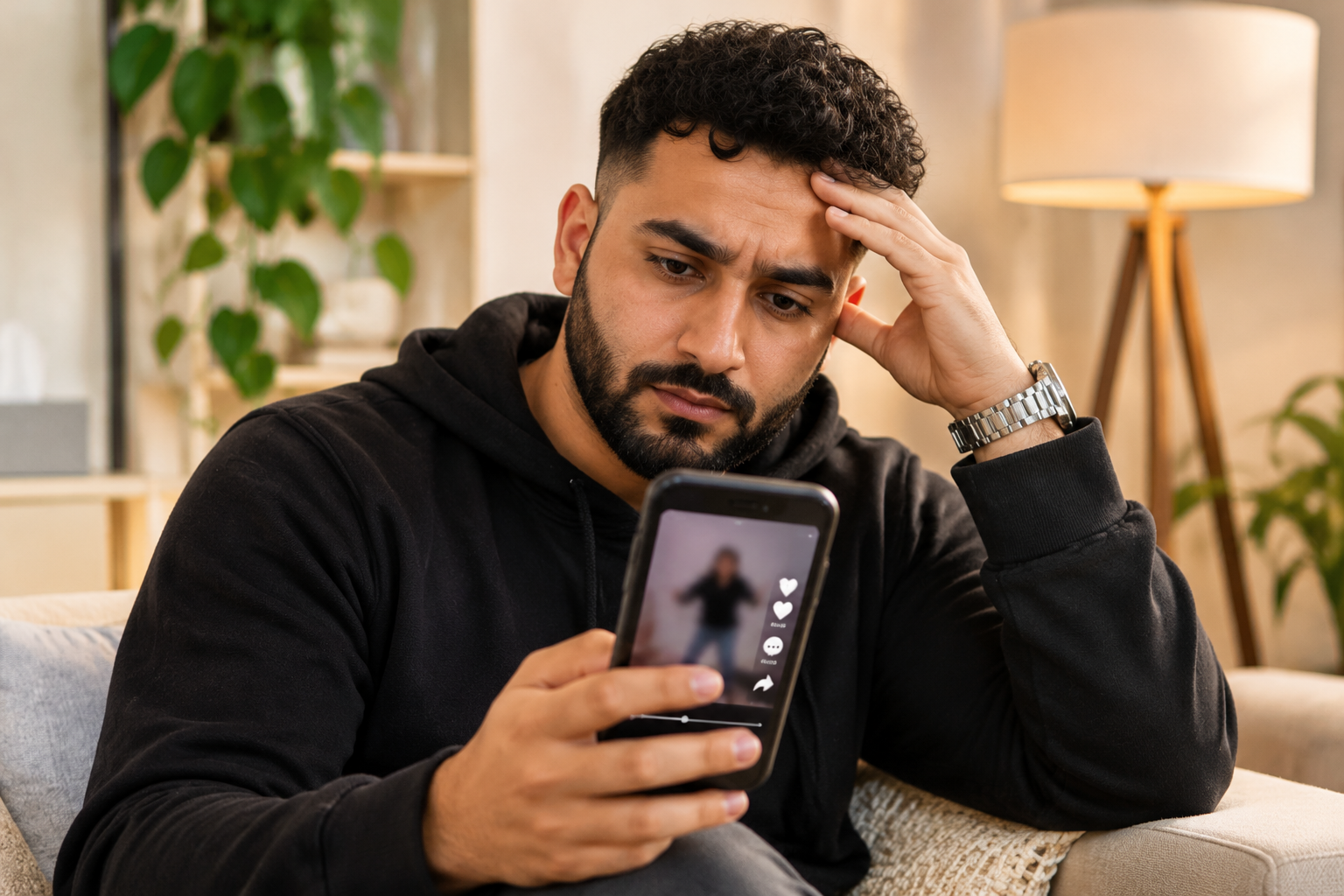
TikTok Addiction: How Excessive Scrolling Can Affect Your Mental Health
TikTok has become a major part of everyday life for millions of people. Whether watching entertaining videos, following trends, learning new things or keeping up with friends, the platform offers an endless stream of content designed to capture attention.
However, what starts as a few minutes of entertainment can gradually become hours of scrolling. For some individuals, TikTok use becomes difficult to control, begins interfering with daily responsibilities and affects their emotional wellbeing.
Excessive social media use is increasingly relevant to conversations about mental health, particularly when individuals struggle to disconnect from their devices.
At Advance Minds Counselling & Mental Health Services, we recognise that problematic social media use can sometimes be connected to deeper emotional difficulties, avoidance behaviours, anxiety and challenges with self-regulation.
What Is TikTok Addiction?
TikTok addiction is a commonly used term to describe compulsive or excessive engagement with the platform that becomes difficult to control and negatively affects everyday functioning.
Although it is not currently a standalone recognised clinical diagnosis, problematic TikTok use can involve behavioural patterns similar to other compulsive habits.
Individuals may repeatedly open the application without thinking, continue watching videos longer than intended or experience discomfort when they cannot access their phones.
Over time, TikTok can become an automatic response to boredom, loneliness, frustration or stress.
Why Is TikTok So Addictive?
TikTok uses a personalised recommendation system that continuously presents videos based on individual interests and viewing behaviour.
Several psychological processes can contribute to excessive use.
Instant gratification: Short videos provide immediate entertainment and stimulation, encouraging users to continue watching.
Habit formation: Repeatedly checking the application can become an automatic behaviour, even when there is no particular reason to use it.
Emotional avoidance: Some individuals use TikTok to temporarily escape uncomfortable thoughts, difficult emotions or stressful situations.
Fear of missing out: Constant exposure to trends, conversations and online activities can create pressure to remain connected.
Signs Your TikTok Use May Be Becoming a Problem
Consider whether you recognise any of these behaviours:
- Spending significantly longer on TikTok than intended.
- Struggling to stop scrolling.
- Checking TikTok immediately after waking up.
- Staying awake late watching videos.
- Feeling restless when unable to access the application.
- Neglecting work, study or personal responsibilities.
- Using TikTok to avoid uncomfortable emotions.
- Finding it difficult to concentrate on other activities.
- Comparing your lifestyle or appearance with other people.
- Feeling disappointed about how much time you spend online.
These behaviours deserve attention when they begin affecting your quality of life.
How Excessive TikTok Use Can Affect Mental Health
Problematic TikTok use can contribute to difficulties with emotional wellbeing.
Anxiety and emotional overwhelm
Constant exposure to information, opinions and stimulating content can leave some individuals feeling mentally overwhelmed.
Reduced concentration
Frequently switching between short videos may make it harder for some people to maintain attention on longer or less stimulating activities.
Sleep disruption
Watching videos late into the night can delay sleep and interfere with healthy sleeping routines.
Low self-esteem
Comparing yourself with influencers and other users may contribute to unrealistic expectations about appearance, relationships, financial success and lifestyle.
Reduced productivity
Hours spent scrolling can gradually replace activities that contribute to personal development, education, employment and relationships.
How to Break Unhealthy TikTok Habits
Changing your relationship with TikTok starts with recognising when and why you use it.
Consider implementing the following strategies:
- Establish realistic daily screen-time limits.
- Avoid opening TikTok immediately after waking up.
- Turn off unnecessary notifications.
- Keep your phone away during meals and conversations.
- Establish a screen-free routine before bedtime.
- Identify emotional triggers that lead to excessive scrolling.
- Replace unnecessary screen time with exercise, hobbies and social activities.
- Practise managing boredom without automatically reaching for your phone.
The goal is not necessarily to eliminate social media. It is to regain control over how and when you use it.
When Should You Seek Professional Counselling?
If TikTok use is affecting your relationships, employment, education, sleep or emotional wellbeing, speaking with a professional counsellor may help.
Counselling can provide an opportunity to explore the underlying reasons behind excessive social media use.
At Advance Minds, counselling can help individuals work towards:
- Understanding emotional triggers and behavioural patterns.
- Developing healthier coping strategies.
- Improving emotional regulation.
- Addressing anxiety and self-esteem concerns.
- Establishing healthier boundaries with technology.
- Improving motivation and daily routines.
- Developing greater awareness of personal habits.
Sometimes the challenge is not simply spending too much time on a phone. It is understanding what you are trying to avoid, replace or achieve through that behaviour.
Take Back Control of Your Time and Mental Wellbeing
Your attention is valuable. Your time is valuable. Your mental health deserves attention.
TikTok should be something you choose to enjoy, not something that controls how you spend your day.
If you are struggling to manage your social media habits, professional support can help you understand your behaviour and develop healthier routines.
Advance Minds Counselling & Mental Health Services
We provide professional counselling and mental health support to individuals looking to make meaningful and lasting changes.
Click the Book Now button on our website to book your appointment with Advance Minds.



Advance Minds Blog
A safe space to explore subjects within the community such as mental health, substance abuse and personal identity.
Our safe space also provides the opportunity for real individuals to express their hardships and success through writing.
Are you in crisis?
- In an emergency, call 000
- Lifeline 13 11 14
- 1800RESPECT 1800 737 732
- Beyond Blue 1300 224 636
- Suicide Call Back Service 1300 659 467