

Reward Charts for Kids: How Positive Reinforcement Helps Children Build Healthy Habits
The Legacy of Fox: A Special Little Boy Who Inspired This Reward Chart
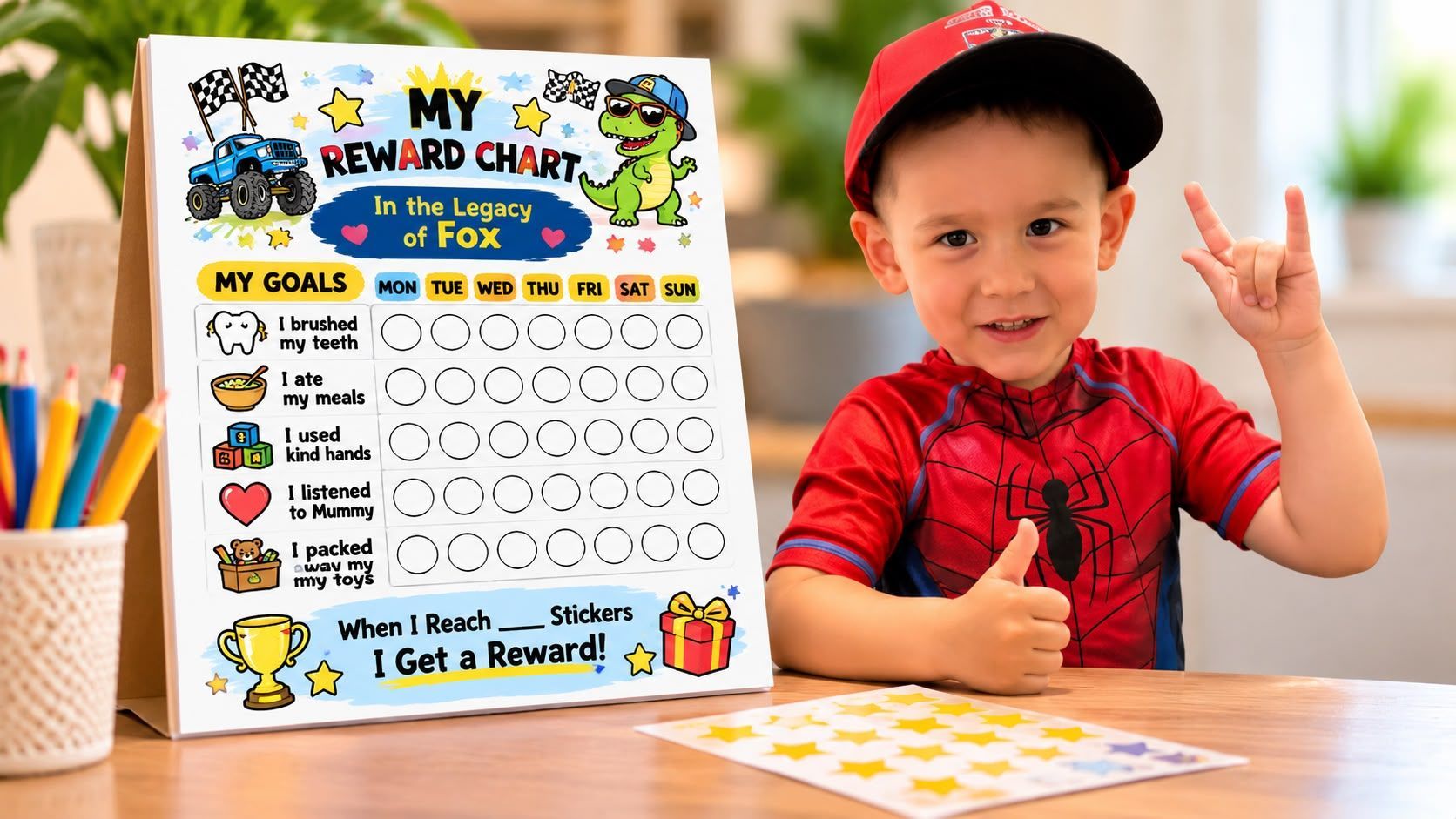
This reward chart holds a very special meaning because it was inspired by a wonderful young boy named Fox. Through his journey of learning, growing and developing positive daily habits, this reward chart has become a meaningful way to recognise his efforts, celebrate his achievements and encourage his confidence.
Fox’s journey reminds us that every child develops at their own pace and that even the smallest achievements deserve recognition. In honour of Fox and the positive impact his journey continues to inspire, Advance Minds is proud to share The Legacy of Fox Reward Chart with other children and families. Our hope is that something created with so much love and encouragement for one special little boy can help many other children experience that same sense of achievement, confidence and pride.
Helping Children Build Positive Habits
Parenting young children comes with many rewarding moments, but it can also bring challenges when teaching everyday routines, emotional regulation and positive behaviour.
Whether it’s encouraging a child to brush their teeth, pack away their toys, finish their meals or use gentle hands, parents often find themselves repeating the same instructions throughout the day.
One practical way to encourage positive behaviour is through a children’s reward chart.
At Advance Minds Counselling & Mental Health Services, we recognise the importance of helping children develop confidence, independence and emotional awareness through positive encouragement.
To support families, we are sharing a special printable reward chart created in the legacy of Fox, celebrating the importance of encouraging children to learn, grow and recognise their achievements.
What Is a Reward Chart for Children?
A reward chart is a visual tool that helps children recognise and practise positive behaviours.
Parents identify a small number of achievable goals and encourage their child to work towards them throughout the week.
Each time a child completes a goal, they receive a sticker, tick or another visual acknowledgement of their effort.
Over time, this can help children understand routines, develop independence and experience the satisfaction of achieving something through their own efforts.
Reward charts are commonly used for behaviours such as:
* Brushing teeth independently
* Packing away toys
* Following everyday routines
* Using gentle hands
* Practising listening skills
* Getting ready for school or bedtime
* Completing age-appropriate responsibilities
The purpose is not to create perfect behaviour. It is to encourage learning, consistency and positive development.
Why Positive Reinforcement Matters
Positive reinforcement involves acknowledging and encouraging behaviours we want children to develop.
Children often respond well when their efforts are noticed, particularly when encouragement is specific and genuine.
For example, rather than simply saying “Good boy” or “Good girl”, parents might say:
“I noticed how carefully you packed away your toys. That was very responsible.”
This helps children understand exactly what they did well.
Positive reinforcement can support several important areas of development.
1. Building Confidence and Self-Esteem
When children recognise their achievements, they may begin to feel more confident in their abilities.
Small successes can encourage them to attempt new tasks and develop greater independence.
2. Encouraging Healthy Daily Routines
Children often benefit from predictable routines.
A reward chart provides a visual reminder of what is expected, making daily responsibilities easier to understand.
3. Supporting Emotional Regulation
Learning to manage frustration, disappointment and strong emotions takes time.
Reward charts can recognise a child’s efforts to practise coping skills, ask for help or respond calmly during challenging situations.
4. Strengthening Parent-Child Relationships
Positive attention can strengthen the connection between parents and children.
When parents recognise effort rather than focusing only on mistakes, everyday interactions may become more encouraging and supportive.
5. Teaching Responsibility and Independence
Age-appropriate responsibilities help children develop confidence in managing everyday tasks.
Reward charts can make these responsibilities feel achievable rather than overwhelming.
Introducing the Legacy of Fox Reward Chart
As part of our commitment to supporting children and families, Advance Minds is sharing a special reward chart created in the legacy of Fox.
This colourful chart includes five everyday goals:
1. I brushed my teeth.
2. I ate my meals.
3. I used kind hands.
4. I listened to Mummy.
5. I packed away my toys.
Children can collect stickers throughout the week and work towards an agreed reward.
The chart is designed to make learning enjoyable while encouraging families to celebrate effort, progress and positive behaviour.
It is also a reminder that every child deserves patience, encouragement and opportunities to succeed.
How to Use the Reward Chart at Home
Step 1: Choose Realistic Goals
Start with a few behaviours appropriate for your child’s age and development.
Avoid expecting too many changes at once.
For younger children, simple goals such as brushing teeth with assistance or placing toys into a basket may be more achievable.
Step 2: Explain the Chart Positively
Introduce the chart as something enjoyable rather than a punishment system.
Explain that stickers recognise effort and progress.
For example:
“Every time you practise one of your goals, we can celebrate your effort together.”
Step 3: Make the Goals Clear
Children need to understand what each goal means.
Rather than expecting a young child to “behave well”, explain the specific action you want them to practise.
For example, “using kind hands” might mean keeping hands gentle during play or asking an adult for help when frustrated.
Step 4: Celebrate Progress
Offer encouragement when your child makes an effort.
Remember that progress is not always consistent.
A child may manage a task independently one day and need extra support the next.
This is a normal part of learning.
Step 5: Choose Meaningful Rewards
Rewards do not need to be expensive.
They might include:
* Choosing a family activity
* Extra story time
* Visiting a favourite playground
* A special activity with a parent
* Choosing a family game
* A small age-appropriate treat
The most meaningful reward is often positive attention and shared time.
Common Mistakes Parents Should Avoid
Although reward charts can be useful, they work best when introduced thoughtfully.
Avoid removing stickers as punishment.
Once a child has earned recognition for an achievement, taking it away may create frustration or discouragement.
Avoid comparing siblings.
Every child develops at their own pace. Reward charts should recognise individual progress rather than create competition.
Avoid unrealistic expectations.
Children may struggle with tasks because of developmental differences, emotional distress, sensory needs or difficulties understanding instructions.
A reward chart should never replace appropriate support.
Avoid making affection conditional.
Children need to know they are loved and valued regardless of how many stickers they earn.
Avoid rewarding eating quantities.
While the chart includes an “I ate my meals” goal, food-related rewards should be handled carefully. Children should not be pressured to finish meals or ignore hunger and fullness cues. Parents may prefer to recognise participating in family mealtimes or practising an agreed routine.
What If Reward Charts Don’t Work?
Not every child responds to reward charts in the same way.
Some children may become overwhelmed by expectations, lose interest in stickers or struggle with behaviours that are not fully within their control.
Children experiencing anxiety, ADHD-related difficulties, trauma, developmental challenges or emotional regulation difficulties may require additional strategies.
Parents should consider whether the goals are realistic, whether the child understands them and whether environmental or emotional factors are making the task difficult.
Sometimes the most helpful response is not another reward but greater understanding of what the child is experiencing.
When Should Parents Consider Counselling?
Parents may benefit from professional support when their child experiences ongoing emotional distress, frequent behavioural difficulties, significant anxiety or persistent family conflict.
Counselling can help families better understand their child’s needs, strengthen communication and develop practical strategies suited to their circumstances.
Advance Minds provides counselling support for children, teenagers, parents and families, including online counselling appointments across Australia.
Our approach focuses on understanding individual circumstances and supporting healthier family relationships.
Download the Legacy of Fox Reward Chart
We invite parents, carers and families to use our specially created reward chart as a positive tool for encouraging children’s everyday achievements.
The Legacy of Fox Reward Chart is designed to celebrate small steps, encourage healthy routines and remind children that progress deserves recognition.
Print the chart, display it somewhere accessible and enjoy celebrating your child’s achievements together.
Supporting Children and Families at Advance Minds
Every child is different, and parenting approaches should reflect their individual needs.
At Advance Minds Counselling & Mental Health Services, we support children, teenagers and families with emotional wellbeing, behavioural challenges, family relationships and practical coping strategies.
We offer face-to-face counselling in Bankstown, Sydney, and online counselling across Australia.
Website: https://www.advanceminds.com.au
Phone: 0466 666 334
Because helping children grow is not about expecting perfection. It is about providing patience, encouragement, understanding and unconditional love.


Advance Minds Blog
A safe space to explore subjects within the community such as mental health, substance abuse and personal identity.
Our safe space also provides the opportunity for real individuals to express their hardships and success through writing.
Are you in crisis?
- In an emergency, call 000
- Lifeline 13 11 14
- 1800RESPECT 1800 737 732
- Beyond Blue 1300 224 636
- Suicide Call Back Service 1300 659 467