

Interracial Relationships and Blended Families: Building Love Across Cultures and Religions
When two people from different cultural or religious backgrounds build a life together, understanding, respect and shared values can help create a family where everyone belongs
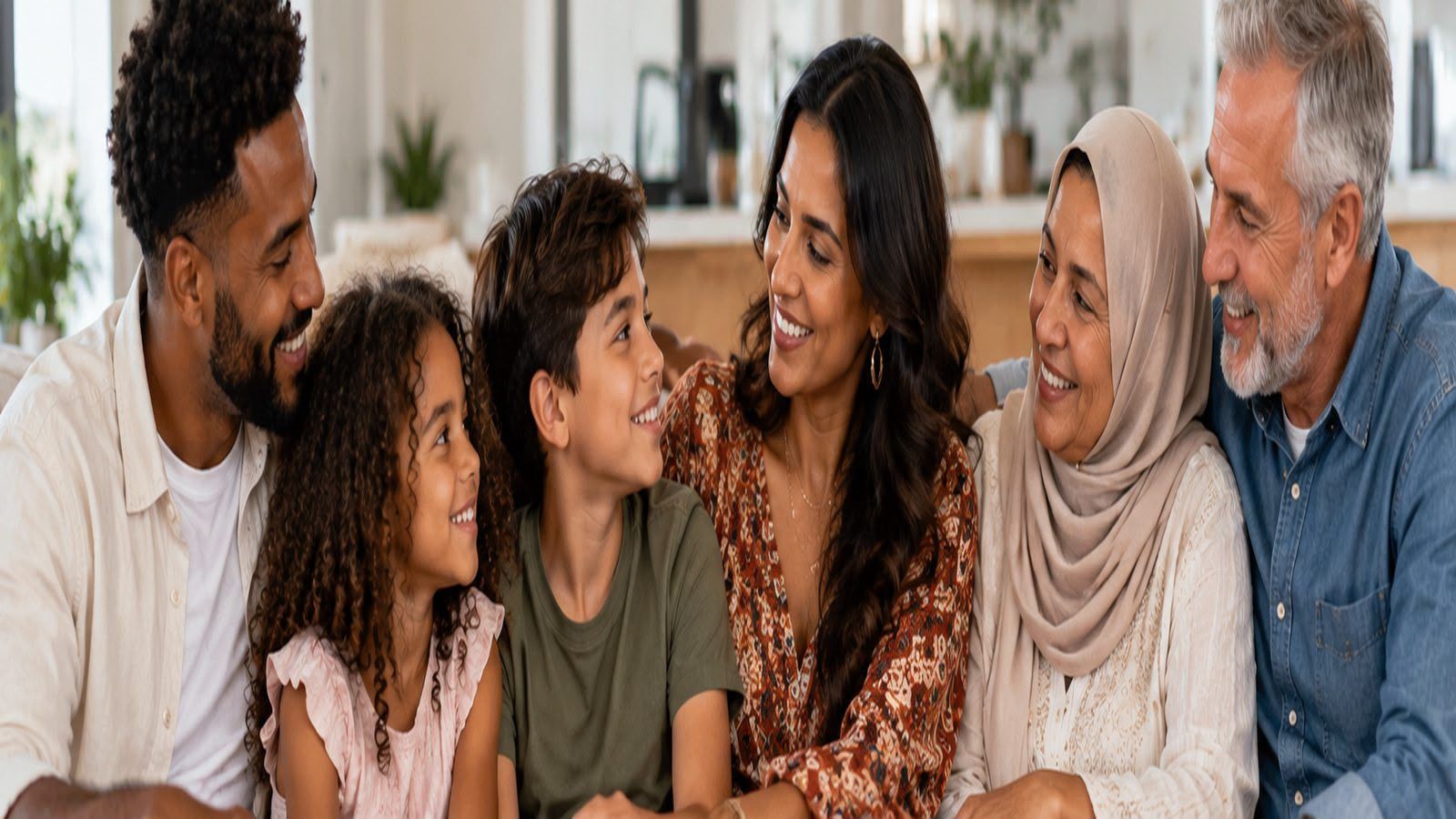
Love does not always begin between two people who share the same cultural background, religion, language or family traditions.
In multicultural Australia, relationships bring together people with different experiences, beliefs and understandings of family life.
An interracial relationship may involve partners from different racial or ethnic backgrounds. An intercultural relationship may involve different customs, languages or cultural identities. An interfaith relationship may involve different religious beliefs or practices.
These experiences can overlap, but they are not interchangeable.
For some couples, differences are a meaningful and enriching part of their relationship. For others, challenges emerge when family expectations, religious practices, parenting decisions or cultural traditions need to be negotiated.
When children from previous relationships are involved, couples may also be building a blended family with several identities, histories and relationships to consider.
A successful relationship does not require two people to abandon where they came from. It requires space for both people to be respected as they build something together.
Love Does Not Require Cultural Sameness
People sometimes assume that couples from different backgrounds will experience more relationship difficulties.
However, cultural difference itself is not evidence that a relationship is unhealthy or incompatible.
Couples from similar backgrounds can disagree deeply about money, parenting, religion and family expectations.
Likewise, couples from different backgrounds can develop strong relationships through shared values, mutual respect and thoughtful communication.
The important issue is how differences are understood and negotiated.
A partner should not be expected to surrender their identity simply because they have entered a relationship.
Instead, couples can explore how their individual histories contribute to the life they want to create together.
Understanding the Family You Each Come From
Every person enters a relationship with experiences shaped by their upbringing.
These experiences may influence expectations around:
* Marriage and commitment.
* Respect for parents and elders.
* Gender roles and household responsibilities.
* Religious observance.
* Raising children.
* Money and financial obligations.
* Family celebrations.
* Emotional expression.
* Privacy and personal boundaries.
* Involvement of extended family.
Not everyone from the same cultural or religious background shares the same values.
It is therefore important to ask your partner what a tradition or expectation means to them rather than making assumptions based on their background.
Two people may use the same word, such as respect, loyalty or family, while understanding it differently.
Discussing those meanings can help prevent misunderstandings.
Respecting Religion Without Losing Your Own Beliefs
Religion can be a deeply personal part of someone’s identity.
For some people, faith influences everyday decisions, family relationships, dietary practices, marriage traditions and how children are raised.
For others, religion may have little influence on daily life.
When partners hold different beliefs, important questions may arise.
Will children be introduced to one religion, both religions or neither?
How will religious holidays be celebrated?
Will either partner attend religious services with the other?
What happens when a religious practice conflicts with a personal boundary?
These conversations deserve honesty and respect.
Respect Does Not Mean Forced Agreement
You can respect your partner’s faith without adopting it.
You can also explain your own beliefs without expecting your partner to change.
Healthy discussions involve listening, understanding and recognising that some beliefs are deeply held.
Not every difference can be resolved through compromise.
Where values are fundamentally incompatible, couples may need to consider what those differences mean for their future.
Religious conversion, participation or observance should never be imposed through threats, humiliation or coercion.
When Extended Families Have Different Expectations
For some couples, the greatest challenge does not come from their differences as partners.
It comes from expectations within their extended families.
Parents or relatives may have strong views about marriage, religion, cultural traditions or the upbringing of children.
A couple may experience pressure to follow particular customs or prioritise one family’s expectations.
Some relatives may struggle to accept a relationship outside their own cultural or religious community.
Others may be supportive but uncertain about how to participate in unfamiliar traditions.
These situations can be emotionally difficult, particularly when someone feels caught between loyalty to their family and commitment to their partner.
Creating Respectful Boundaries
Couples can acknowledge the importance of extended family while recognising their right to make decisions about their own relationship.
This might involve agreeing on:
* Which celebrations to attend.
* How often relatives visit.
* Whether private disagreements are shared with family.
* How children participate in cultural or religious activities.
* How to respond to disrespectful comments.
* Which decisions belong to the couple.
Respecting parents does not require allowing relatives to control a marriage.
At the same time, boundaries can often be communicated without rejecting family relationships entirely.
Interracial Relationships and the Experience of Racism
Interracial couples may encounter prejudice, stereotypes or discrimination.
These experiences can come from strangers, workplaces, communities or family members.
One partner may experience racism directly while the other has not encountered similar treatment.
This difference can affect how each person understands an incident.
For example, a partner may describe a comment as discriminatory while the other initially views it as harmless.
Rather than immediately dismissing the concern, it can be helpful to listen and ask questions.
Understanding your partner’s experience does not require pretending that you have lived through the same circumstances.
Supporting Your Partner When Discrimination Occurs
Support may involve:
* Listening without minimising the experience.
* Recognising that repeated incidents can be exhausting.
* Challenging discriminatory comments where safe and appropriate.
* Agreeing on boundaries with relatives.
* Asking what support your partner would find helpful.
* Avoiding assumptions about how your partner should respond.
The goal is not for one partner to speak on behalf of the other.
It is to create a relationship in which both people feel respected and supported.
Blended Families Bring Additional Relationships Into the Marriage
A blended family may include children from previous relationships, step-parents, step-siblings and other important family members.
When cultural or religious differences are also present, families may need to navigate several changes at once.
Children may be adjusting to a new household, different routines and unfamiliar traditions.
They may also be managing loyalty to a parent who lives elsewhere.
These adjustments require patience.
A new partner should not assume that becoming a step-parent automatically creates the same emotional bond as an established parent-child relationship.
Trust and closeness often develop gradually.
Helping Children Feel That They Belong
Children in blended families may have different cultural, ethnic or religious identities.
Some may identify strongly with one background. Others may value several parts of their heritage or still be exploring what those identities mean to them.
Children should not feel pressured to reject one part of their identity to be accepted by the family.
Helpful approaches include:
Recognise Each Child’s History
Acknowledge the people, traditions and relationships that were important before the blended family formed.
Avoid treating a child’s previous family experiences as something that must be replaced.
Allow Children to Ask Questions
Children may ask why family members follow different religious practices or celebrate different occasions.
Respond in ways that are appropriate for their age and understanding.
Avoid Loyalty Tests
A child should not have to prove love for one parent or step-parent by rejecting another.
Where safe and appropriate, respect the child’s existing relationships and cultural connections.
Create Shared Family Experiences
New family traditions can develop alongside existing ones.
A blended family might establish shared meals, outings, celebrations or everyday routines that everyone can participate in comfortably.
Belonging does not require everyone to be identical.
What Happens When Parents Disagree About Religion?
Disagreements about religion can become particularly sensitive when children are involved.
One parent may want their child raised within a particular faith.
The other may prefer exposure to multiple beliefs or want the child to make their own decisions later.
Rather than postponing the conversation until a disagreement occurs, couples can explore their expectations early.
Useful questions include:
* What does religion mean to each of us personally?
* Which practices are important to maintain?
* What do we want our children to understand about each parent’s beliefs?
* How will we respond if a child develops different beliefs?
* How can we discuss differences without disrespecting one another?
* What role should extended family have in these decisions?
Parents may not reach complete agreement on every issue.
However, respectful communication can help them identify areas of shared responsibility and concerns requiring further discussion.
Building a Shared Culture Within Your Relationship
Every couple develops its own relationship culture.
This includes the routines, values, expectations and traditions that shape everyday life.
An intercultural couple has an opportunity to decide consciously what they want that shared culture to include.
They might combine familiar celebrations, introduce each other to meaningful traditions or create entirely new experiences.
Importantly, this should be a mutual process.
One partner should not be expected to do all the adapting while the other person’s customs automatically become the household standard.
A useful question is:
Are we building a life that reflects both of us, or is one person gradually disappearing into the other’s expectations?
Cultural Respect Also Applies to Emotional and Sexual Intimacy
Cultural and religious beliefs may influence attitudes towards affection, modesty, privacy, gender expectations and sexual relationships.
Partners may have different experiences discussing intimacy openly.
One person may have grown up in an environment where sexual concerns were rarely discussed.
Another may be comfortable expressing sexual needs and boundaries directly.
Neither person’s cultural background should be used to stereotype their sexual preferences or expectations.
Couples can explore what intimacy means to each person, including emotional closeness, affection, privacy, sexual desire and consent.
Mutual respect is essential.
Cultural or religious expectations never remove the need for voluntary consent or justify pressure, coercion or abuse.
When Cultural Differences Become a Source of Conflict
Some disagreements are ordinary differences in preference.
Others may involve important questions about autonomy, equality, respect and safety.
Concerns worth exploring include:
* One partner repeatedly dismisses the other’s culture.
* Religious beliefs are used to shame or control.
* A partner is pressured to abandon meaningful traditions.
* Relatives make discriminatory comments that go unaddressed.
* Children are discouraged from acknowledging part of their heritage.
* One person is expected to make all the compromises.
* Disagreements about parenting or faith remain unresolved.
These experiences deserve careful attention.
Where intimidation, coercive control or violence is present, specialist individual support and safety assessment may be more appropriate than joint counselling.
How Couples and Family Counselling Can Help
Counselling can provide a structured environment for partners to explore cultural differences, family expectations and relationship concerns.
Rather than assuming one culture or religion is correct, counselling can help individuals understand what matters to each person.
Topics may include:
* Communication across different family backgrounds.
* Interfaith marriage expectations.
* Cultural identity and belonging.
* Boundaries with parents and relatives.
* Parenting across different religions.
* Blended family relationships.
* Step-parenting expectations.
* Discrimination and emotional support.
* Intimacy, affection and relationship boundaries.
* Shared values and future decisions.
Counselling does not require couples to abandon their beliefs or agree on everything.
It provides an opportunity to examine their differences and make informed decisions about their relationship.
Interracial, Intercultural and Family Counselling in Bankstown
Advance Minds provides couples counselling, marriage counselling and family counselling for people navigating relationship and family difficulties.
Our Bankstown practice serves a culturally diverse community, and appointments are also available online across Australia.
If you and your partner are experiencing conflict around cultural expectations, religious differences, extended family involvement or blended family responsibilities, counselling may help you explore these concerns respectfully.
Learn more about couples and marriage counselling and family counselling.
To enquire about support, visit Advance Minds or book an appointment.
Love across cultures is not about becoming the same.
It is about recognising each other’s individuality, respecting what matters and creating a shared life in which both partners, and every child in the family, have room to belong.



Advance Minds Blog
A safe space to explore subjects within the community such as mental health, substance abuse and personal identity.
Our safe space also provides the opportunity for real individuals to express their hardships and success through writing.
Are you in crisis?
- In an emergency, call 000
- Lifeline 13 11 14
- 1800RESPECT 1800 737 732
- Beyond Blue 1300 224 636
- Suicide Call Back Service 1300 659 467