

Online Counselling When You Have No Private Space at Home: What Are Your Options?
Sharing a home does not automatically rule out online therapy, but headphones alone cannot protect a conversation that others can hear.
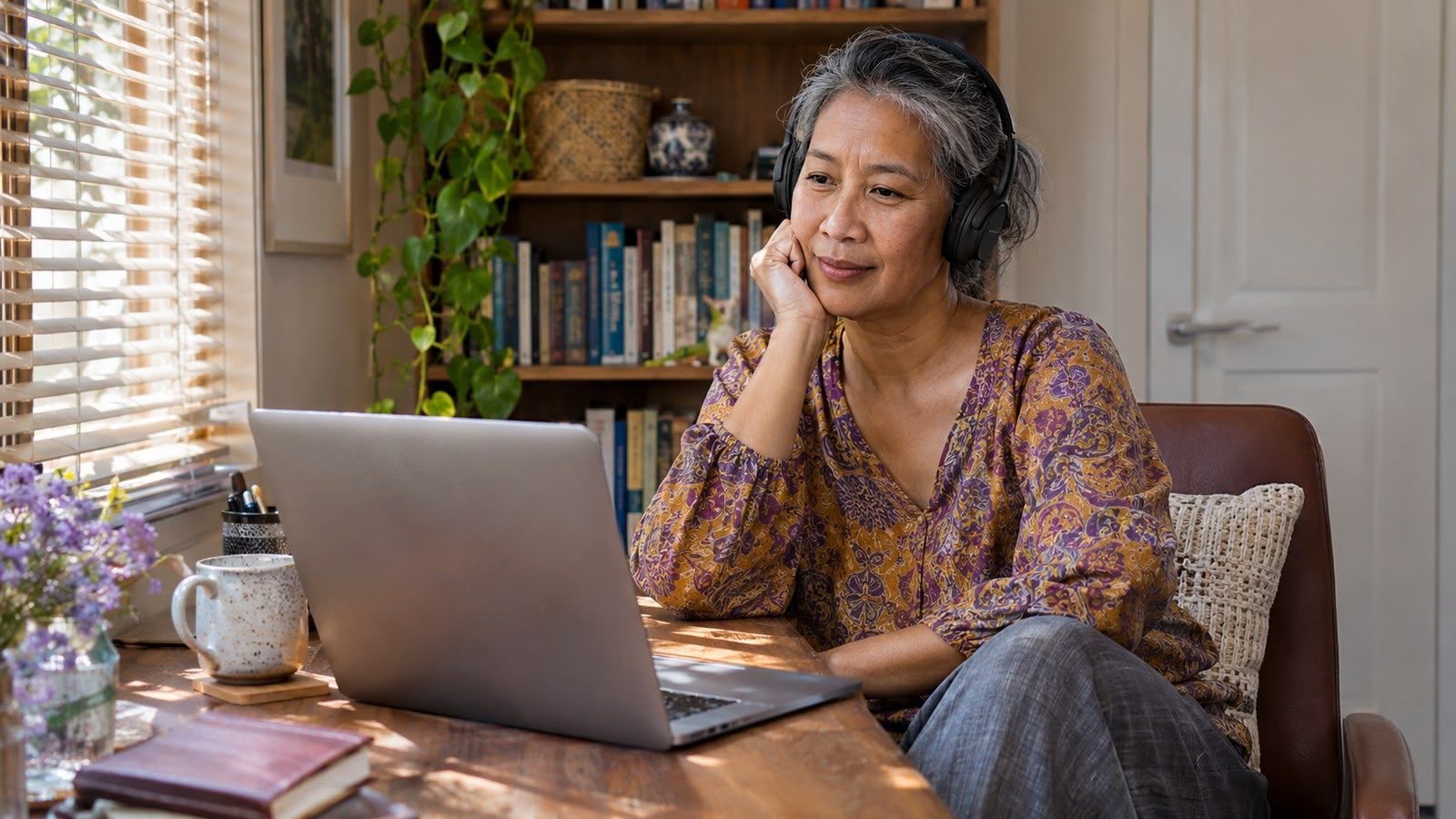
Online counselling may seem like the practical option until you think about where the conversation will happen. A partner works in the next room, children move through the house or you share accommodation without a reliable space of your own.
You might worry that asking for privacy will create questions you do not want to answer. You may also feel unable to speak honestly if someone can overhear.
These are reasonable concerns to discuss before booking. Online access is useful only when the setting also allows appropriate privacy, safety and attention.
Tell the practice about the limitation early
You do not need to solve every practical problem before making an enquiry. Explain that you are interested in counselling but do not have a reliably private room.
Ask what arrangements the practice can consider. The answer may involve a different appointment time, an in-person visit or another setting you can access safely.
Do not assume a particular alternative is available. Confirm the session format, location requirements and any practical arrangements before paying or reorganising your day.
You can describe the limitation without explaining sensitive relationship or family details to reception. Ask how to communicate privately with the practitioner if that is needed.
Check what people can hear
Headphones reduce the sound coming from your device. They do not stop other people hearing your voice.
Consider doors, shared walls, open windows and people entering unexpectedly. Think about whether you can speak naturally, rather than whispering or avoiding the reason you sought help.
If it is safe and straightforward, test the room with someone you trust using an ordinary conversation. You do not need to disclose counselling content to check how far sound travels.
Avoid treating privacy as something you must prove perfectly. Explain the realistic limits to the counsellor so you can decide together whether the arrangement is appropriate.
Ask for an ordinary household agreement
Where it is safe to do so, you might request a set period without interruptions, close a door and arrange for children to be supervised elsewhere.
The explanation can be simple: you have a private appointment and need uninterrupted time. You do not owe every housemate the content of your session.
Choose a time that does not depend on everyone unexpectedly staying quiet. A reliable arrangement is more useful than hoping the household will happen to be empty.
If requests for privacy lead to anger, monitoring or threats, the concern is more than a crowded home. Seek advice about safer access rather than confronting the person as a condition of attending therapy.
Consider another suitable setting
A private room at a trusted person’s home or a bookable room at an appropriate local facility may be an option. Check permission, availability, sound privacy, internet access and whether anyone may enter.
Do not assume a library room, workplace office or community space is confidential simply because a door closes. Confirm how the space is used and whether your conversation could be overheard.
Public cafés, shared waiting areas and open workplaces are generally poor settings for sensitive counselling conversations.
A stationary car may seem private, but consider heat, comfort, nearby people, connection and personal safety. Discuss it with the practitioner first. Never attend counselling while driving or supervising a situation that needs your attention.
Include device privacy
The room is only one part of the arrangement. A shared device or account can expose appointment notifications, emails or browsing activity.
Ask how the practice sends links, reminders and messages. If a particular contact method is unsafe or not private, say so before it is used.
Use a device you can access safely and close unrelated applications where practical. Avoid recording the session or allowing another person to listen without discussing this and obtaining appropriate agreement.
No platform or setting can be promised to eliminate every privacy risk. Ask about the practice’s actual arrangements rather than assuming all online services work in the same way.
Plan for an interruption or dropped connection
Discuss what you will do if someone enters or you can no longer speak freely. A simple statement such as “I need to pause” can be enough to stop the sensitive discussion.
Agree on how the practitioner should respond and how contact will resume. Check which phone number or message route is safe if the video connection fails.
The practitioner may also need to confirm your current location and an appropriate emergency contact as part of their safety process. Ask how that information is handled.
Do not continue disclosing sensitive information simply because the appointment clock is running. Tell the counsellor when the setting changes so suitability can be reviewed.
Protect time after the conversation
If possible, allow a short period after counselling before returning to work, parenting or a crowded household.
You may want water, a quiet walk or a few minutes to note what you want to remember. Avoid leaving sensitive notes visible on a shared table or unlocked screen.
Ask yourself what will make the transition manageable. If you need to return immediately to other responsibilities, tell the counsellor so the session can include time to settle and plan the next step.
When meeting in person may fit better
Online counselling is not the right arrangement for every situation. If you cannot obtain enough privacy, feel monitored or cannot give the session adequate attention, an in-person appointment may be more appropriate.
That decision is practical and personal. Choosing another format does not mean you have failed to make online therapy work.
Advance Minds offers counselling in person at Bankstown and online across Australia. Explore the counselling services and contact the practice to discuss privacy before booking. An enquiry can begin with the practical barrier you are facing, without having to disclose everything at once.



Advance Minds Blog
A safe space to explore subjects within the community such as mental health, substance abuse and personal identity.
Our safe space also provides the opportunity for real individuals to express their hardships and success through writing.
Are you in crisis?
- In an emergency, call 000
- Lifeline 13 11 14
- 1800RESPECT 1800 737 732
- Beyond Blue 1300 224 636
- Suicide Call Back Service 1300 659 467